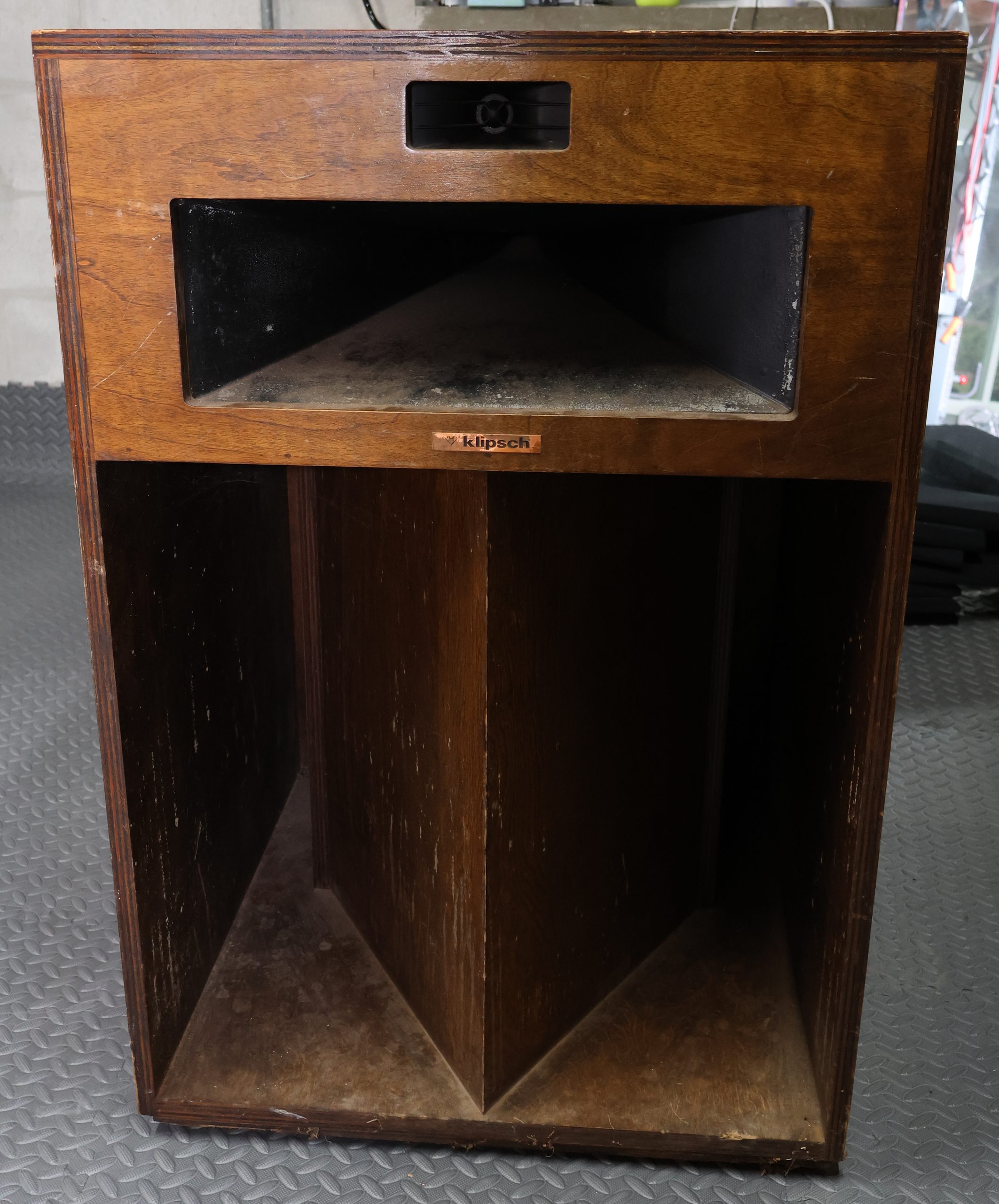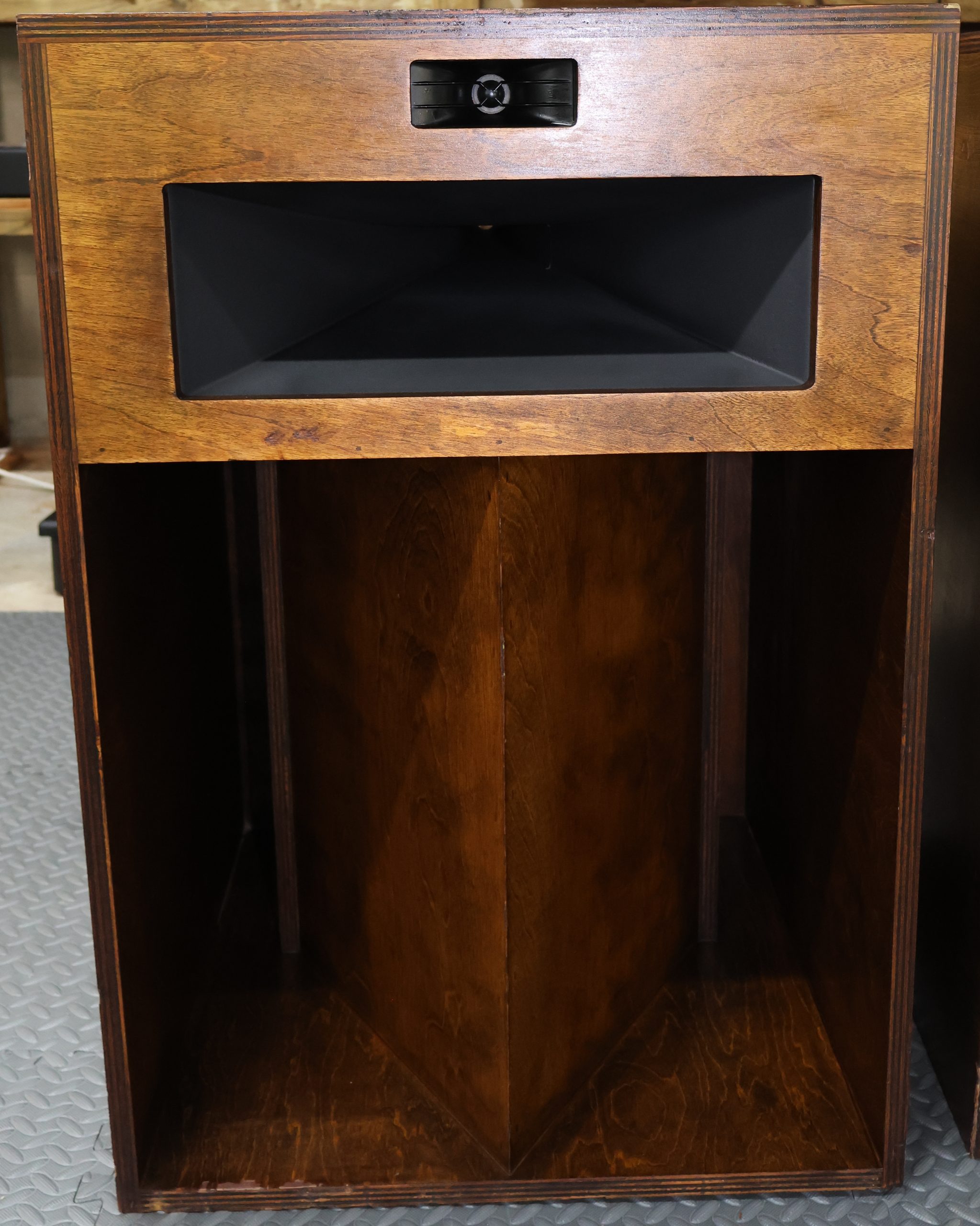
Almost everything that lands on my bench belongs to somebody else. Somebody’s dad’s receiver, somebody’s estate-sale turntable, somebody’s “it hums, can you look at it.” This one was different. These Klipsch La Scalas came home with me because I wanted them. They looked like fun, they were local, and the price was the kind you don’t argue with.
The condition, on the other hand, you could argue with all day. Cosmetically they were rough — scuffed, filthy, decades of a life I know nothing about baked into every surface. The plywood had stories. The horns had opinions. I loaded them into the car fully expecting to spend a weekend with a soldering iron and a shopping cart full of parts.
Why I assumed the worst
These are 1981 speakers. That is 45 years old. Standard shop wisdom for anything that age is simple: assume the passive components have quietly given up, budget for a full recap, and be pleasantly surprised if the drivers survived. I have pulled crossovers out of speakers half this age that measured like open circuits. So before anything else, out came the networks and onto the bench they went.
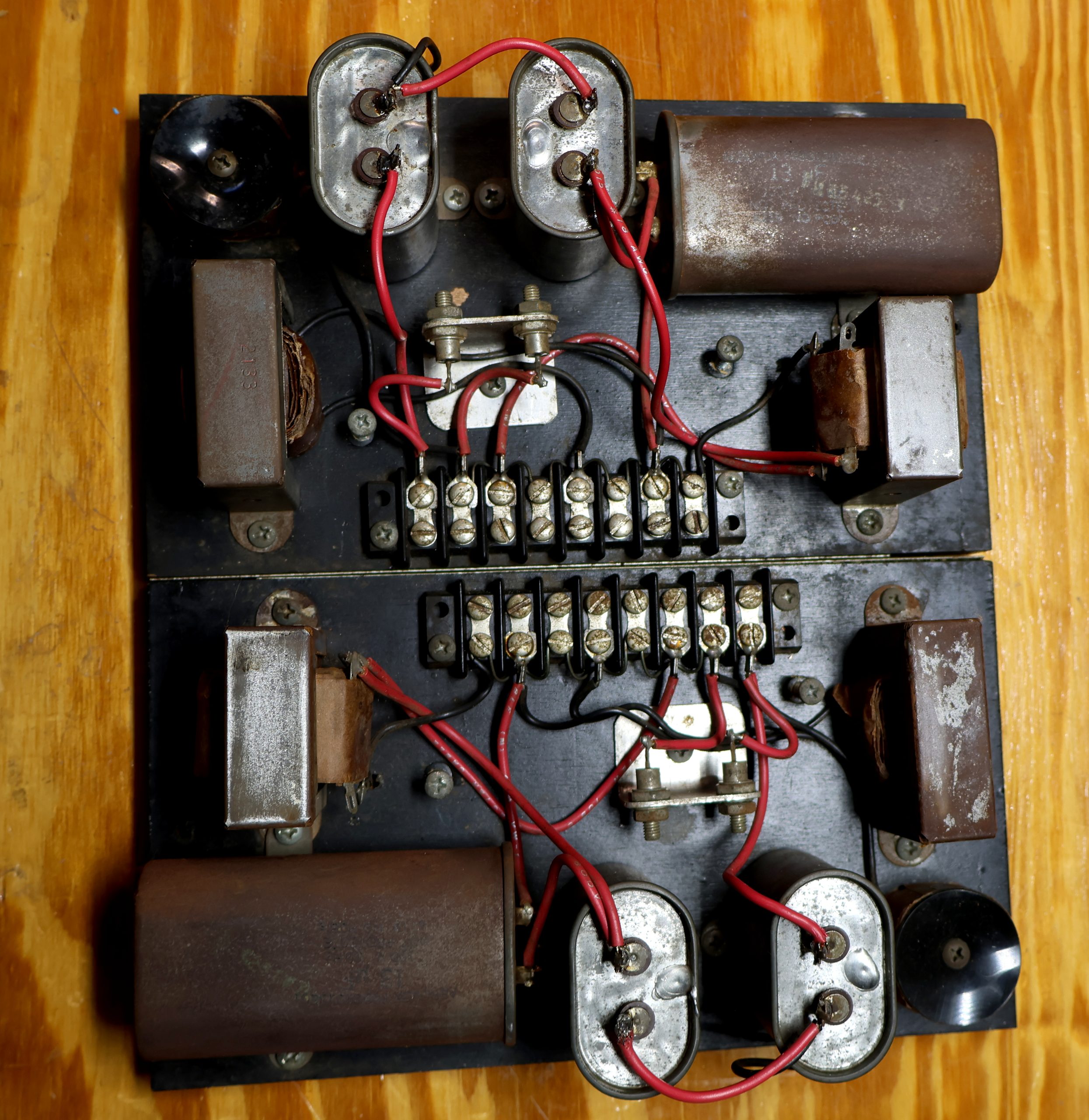
The photo is the pair of crossover networks pulled from the cabinets, laid out side by side after I cleaned them up – they were truly discussing.
What the meter actually said
Nothing was wrong. Not “acceptable for its age” — nothing wrong. I went through it piece by piece:
- Capacitors: every single one measured within its rated tolerance, and the ESR figures were the kind you’d shrug at on a new part. No drift, no leakage, no drama.
- Inductors: filthy, coated in the same grime as everything else, and dead on spec.
- Autotransformer: the midrange autoformer read exactly where it should on every tap.
- Drivers: woofer, squawker and tweeter all measured correctly, no shorted or open voice coils, no rubbing.
I re-checked a couple of them because I didn’t believe the first reading. Same numbers.
Why they survived
Here’s the part that explains it: there is not a single electrolytic capacitor in these networks. Klipsch used oil-filled capacitors — the fat brown cylinder and the two silver cans you can see in the photo. Electrolytics are the parts that die of old age. They dry out, the ESR climbs, the value wanders off, and eventually the speaker sounds soft and wrong and nobody can say when it started. Oil-filled caps simply don’t have that failure mode built into them. There is no electrolyte to lose.
The autoformer is the same story. It’s a wound component, sealed and boring, and boring is exactly what you want in something that has to sit in a cabinet for four and a half decades. Klipsch could have saved money in 1981. They didn’t, and I’m the guy sitting here in 2026 collecting the dividend.
That’s the real lesson, and it isn’t about Klipsch specifically. Parts chosen for longevity stay chosen. Every cheap electrolytic saves a few cents at the factory and costs somebody a bench afternoon thirty years later.
The wash cloth
So for one of the very few times in my working life, I put the iron back in the holder and went and got a wash cloth instead. Warm water, mild soap, patience. Clean the boards, clean the terminal strips, clean the hardware, clean the cabinets, clean the drivers. Reassemble. That was the whole restoration.
There’s a strong temptation with vintage gear to improve it — new film caps, new wire, new everything, because that’s what you do. But when the original parts test perfectly, replacing them isn’t restoration, it’s just replacing things. The correct repair is sometimes no repair. Knowing when to stop is a skill, and it took me a lot longer to learn than soldering did.
How they sound
Like La Scalas. Absurdly efficient, immediate, and completely unbothered by whatever modest amplifier you point at them – I use them with my 300B amp. They do the thing horn speakers do where a snare drum sounds like it’s actually in the room rather than being described to you from a distance. Ugly, enormous, and grinning at me from across the room.
Filthy speakers, spotless electronics, and a weekend I got back. Best money I’ve spent on myself in a while.
And if you a reading this sentence, you deserve before and after images 🙂